
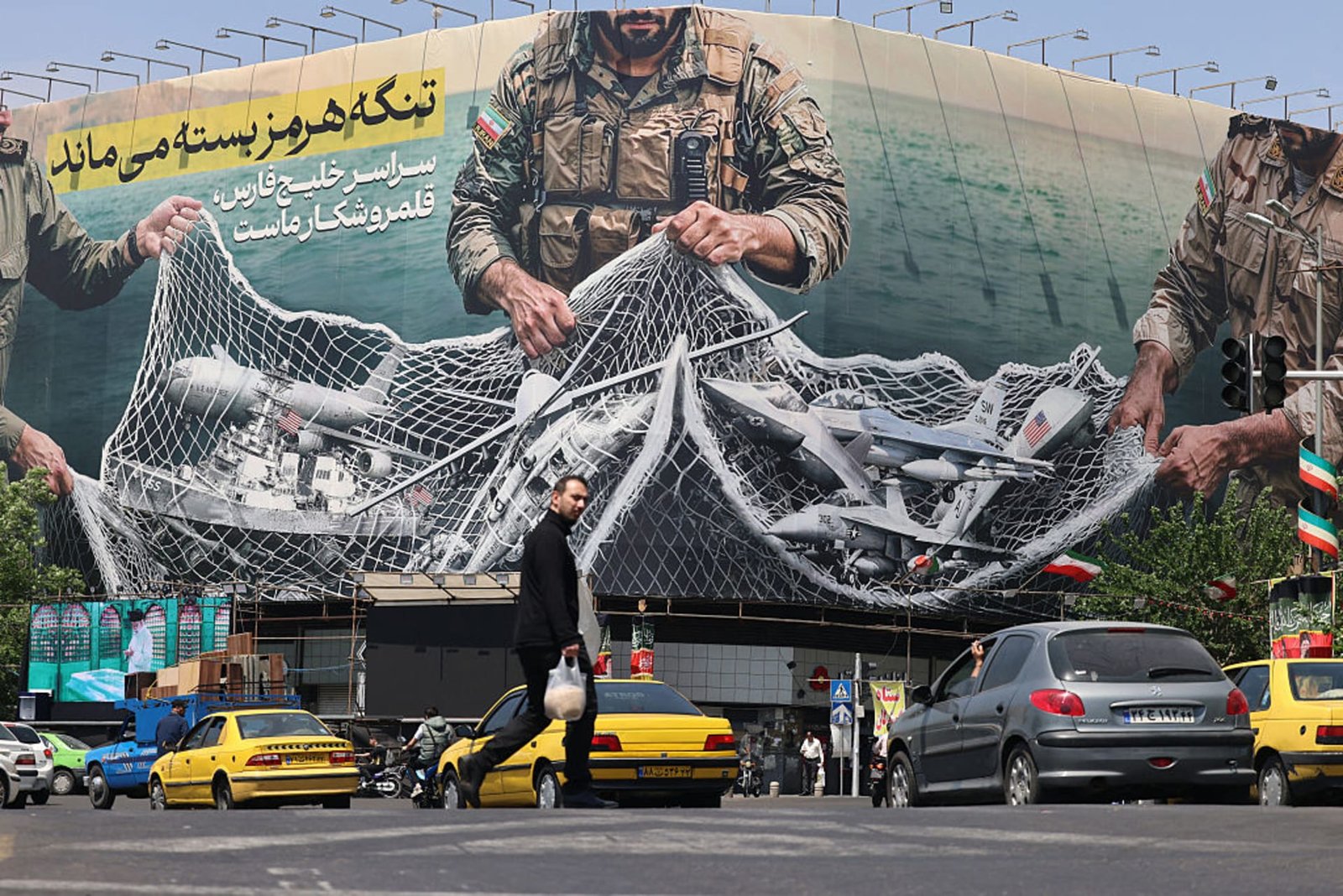
A high-level corporate assessment evaluating the fiscal, human, and military parameters of the recent conflict, analyzing the long-term geopolitical liabilities incurred by global markets under the newly signed bilateral Memorandum of Understanding.
The strategic conclusion of this conflict underscores a dramatic shift in Middle Eastern geopolitics, forcing a harsh evaluation of Western deterrence architecture. Assessing the True Cost of Trump’s Iran War reveals a landscape of severe macroeconomic disruptions, critical munitions depletion, and fragmented maritime security protocols that far outweigh any short-term diplomatic concessions. Ultimately, calculating the True Cost of Trump’s Iran War demands an analytical framework that looks past political rhetoric to measure the deep, systemic liabilities imposed upon global trade stability.
True Cost of Trump’s Iran War realities
With the signing of a Memorandum of Understanding (MOU) on Wednesday, the Iran war is over, at least for now. The full ramifications are not yet obvious. We do not know, for example, what restrictions on its nuclear program, if any, Iran will ultimately agree on as part of the follow-on negotiations—though the economic windfall President Donald Trump is offering Tehran up front greatly lessens the Islamic Republic’s incentive to compromise. But one thing can already be said with confidence: The war was not worth the high price paid for it.
There is, first, the human cost. The U.S. lost thirteen troops in the conflict, while Iran lost over 3,375 people, including 170 killed in what was likely a Tomahawk missile strike on a girls’ school. Twenty-six people who were also killed in Iran’s missile and drone attacks on Israel, and dozens more in various Gulf states. At least two thousand people have been killed in Lebanon where Israel has mounted a major offensive in response to Hezbollah attacks.
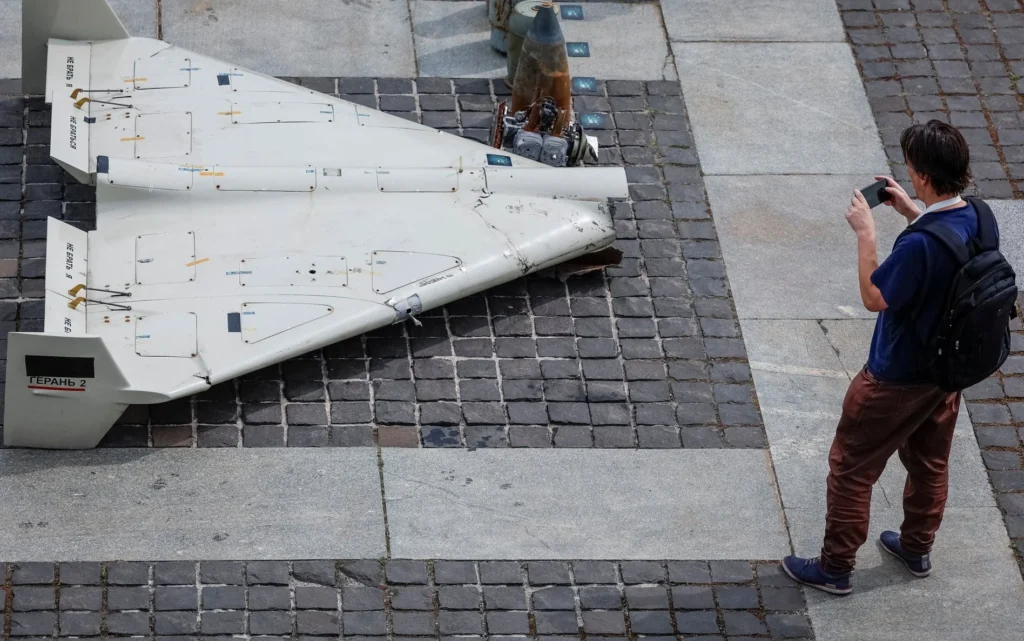
Calculating the True Cost of Trump’s Iran War
Then there is the economic cost. Moody’s Analytics estimates that the war has cost U.S. consumers and taxpayers about $132 billion so far and counting.
The largest share of that came through the price at the pump. Gasoline prices peaked at an average of $4.56 a gallon before dropping once it appeared that the two sides might come to an agreement. Fertilizer prices also climbed about 47 percent during the war, indirectly contributing to rising food costs. Persian Gulf countries and the Global South were hit even harder than the United States. As a result of the war, the World Bank downgraded its global forecast for economic growth this year to 2.5 percent—the lowest level since the Covid-19 pandemic.
Finally, there is the military cost. According to The Wall Street Journal, the deputy secretary of defense just told members of Congress last week that the department will be requesting $80 billion in supplemental funding to cover the cost of the war and other expenses. That is almost certainly a massive underestimate. It does not include, for example, the cost of repairing the twenty U.S. bases in the region that suffered damage from Iranian attacks. The United States will also need to pay to repair or replace the forty-two U.S. military aircraft, both manned and unmanned, that were lost or damaged in the conflict.
Strategic impact and the True Cost of Trump’s Iran War
It will be even harder and costlier to replace all of the high-end U.S. missiles employed in the conflict. The U.S. fired more than one thousand Tomahawk cruise missiles and more than 1,500 air-defense missiles. The expended munitions include more than half of the prewar inventory of Patriot missiles, which are desperately needed by Ukraine to defend against Russian missile attacks. Replacing those stockpiles could take up to six years, the Wall Street Journal reports, and in the meantime the United States will be less prepared for a major conflict against China or Russia.
Other states in the region also suffered major damage. The Gulf states suffered an estimated $58 billion in damage, according to one estimate. The damage to Iran is even more extensive; by some estimates, it will cost $300 billion to rebuild. And yet Iran emerged with most of its drones and missiles intact. Its nuclear program was set back by bombing—particularly the strikes conducted by U.S. and Israeli aircraft in June 2025. Iran is not believed to have undertaken any enrichment since then, though the regime still retains an estimated eleven tons of enriched uranium along with bomb-making know-how and capacity.
True Cost of Trump’s Iran War chokeholds
But while international negotiations with Iran have long centered on the country’s nuclear program, this conflict allowed Iran to unveil a new economic weapon of mass destruction: using drones, missiles and mines, it was able to close the Strait of Hormuz to all but a trickle of the usual maritime traffic. Because the Strait normally carries 20 percent of the world’s oil, its closure plunged the world into an energy crisis and forced Trump to end the war without achieving his objectives of regime change, the destruction of Iran’s nuclear and missile programs, or the end of its support of regional proxies such as Hezbollah.
Where the U.S.-Iran Deal Lands on Core Issues
A U.S. official shared the 14-point preliminary agreement, which creates a 60-day window for the U.S. and Iran to negotiate a final deal.
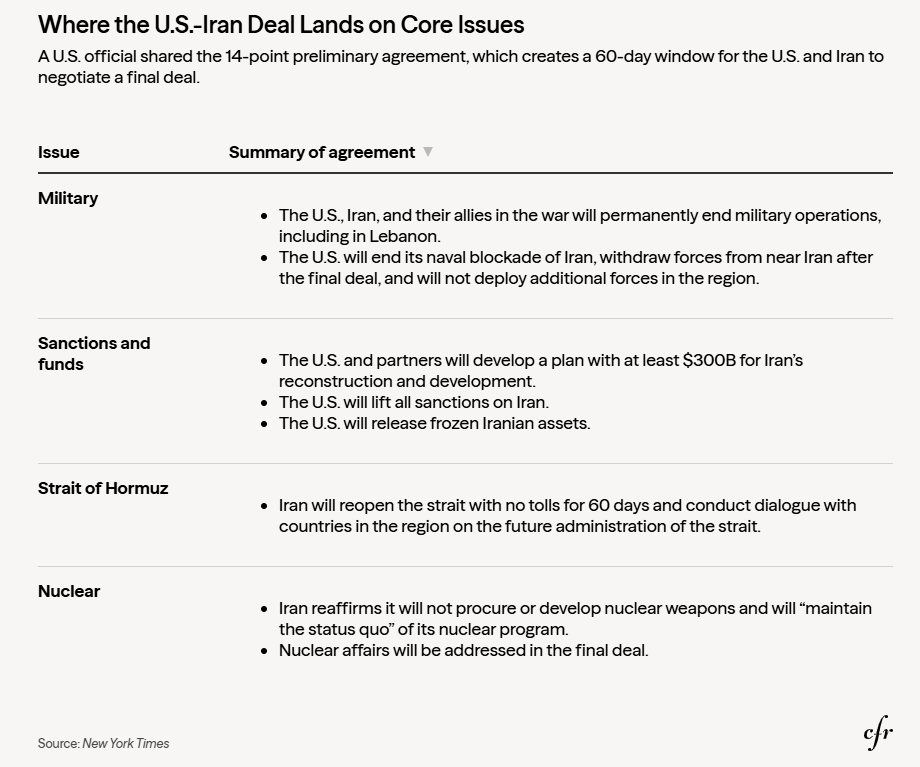
The generous terms of the MOU—under which the U.S. pledges to offer Iran sanctions waivers followed by a total lifting of sanctions, giving Iran access to frozen funds, and even providing a $300 billion reconstruction fund—can be seen as largely the cost of re-opening the Strait.
That cost may grow, because under the agreement, Iran only pledged to allow free access through the critical waterway for sixty days. Tehran has given every indication that it will then try to charge, in coordination with Oman, “user fees” that amount to tolls by another name. That would be a violation of the principle of freedom of navigation that the U.S. has upheld since its wars against Barbary Pirates in the earliest days of the republic.
Settlement parameters and the True Cost of Trump’s Iran War
In sum, the Iran war cost a lot—in economic, military, and human terms—and delivered little tangible benefit. It may, in fact, embolden and empower Iran. Tehran can now boast of having survived a joint U.S.-Israel attack and emerging with its regime intact, even if a few of the players at the top have changed. Iran can now use the funds it receives from the lifting of sanctions and unfreezing of assets to rebuild not only its economy but also its military capacity—and to increase support for proxy groups like Hezbollah.
Trump is a master of political messaging, but it will be hard for him to spin this conflict as anything other than a grievous defeat.