The essay argues that historical figures and episodes (notably Cyrus the Great and other Persian, Greek, and religious memories) are being mobilized by Iran, the United States, and Israel to frame contemporary confrontations as civilizational conflicts. It contends that such civilizational binaries are modern constructs and misleading: history more often shows hybridization, borrowing, and complex statecraft. The author calls on modern states—especially Tehran, but also Washington and Jerusalem—to align their policies with the ethical claims they invoke from the past rather than claiming exclusive custodianship of antiquity.
Discourse claimCompeting states invoke selective episodes from antiquity to legitimize contemporary confrontations, but history shows hybrid exchange rather than immutable civilizational divides.
Other
Conditional
Critical
Reinforcing
Outlook-20
-1000+100
Certainty60
Urgency40
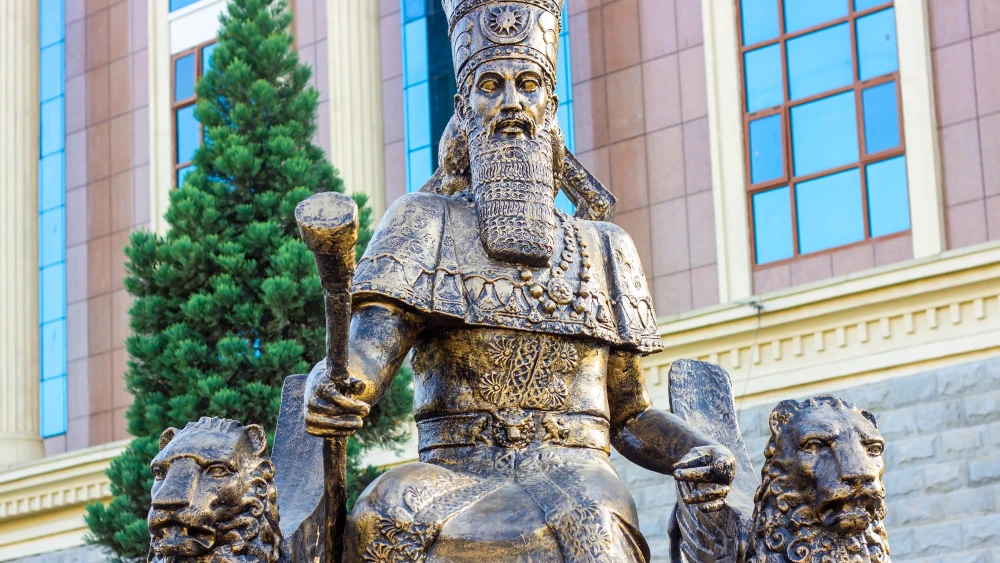
The critical issue on Cyrus Day is not which political actor owns antiquity.
Key expressions
Cyrus Day
civilizational narrative
borrowed more than they conquered
Analytical note
Why it matters now: The piece is timely because the Cyrus Day observance coincides with heightened tensions between Iran, Israel, and the United States, and because competing historical narratives are being used to justify present policies. Author assumptions/evidence: The author assumes that political actors selectively appropriate historical episodes and supports this with examples from ancient sources (Cyrus Cylinder, Book of Esther), national epics (Shahnameh), late-antique monuments (Shapur’s reliefs), and modern political rhetoric (reference to U.S. officials invoking ancient Greece). Omitted variables: The article does not empirically analyze domestic political dynamics inside Iran (e.g., factional politics, public opinion beyond Cyrus Day), the concrete military or diplomatic actions shaping current confrontation, or the role of regional actors (Saudi Arabia, Turkey, Gulf states) and non-state forces beyond the Taliban mentioned. Referenced real-world events are linked to the Iran–U.S.–Israel standoff, the Taliban’s return to power in Afghanistan, and recent U.S. political rhetoric that frames conflicts in civilizational terms.