
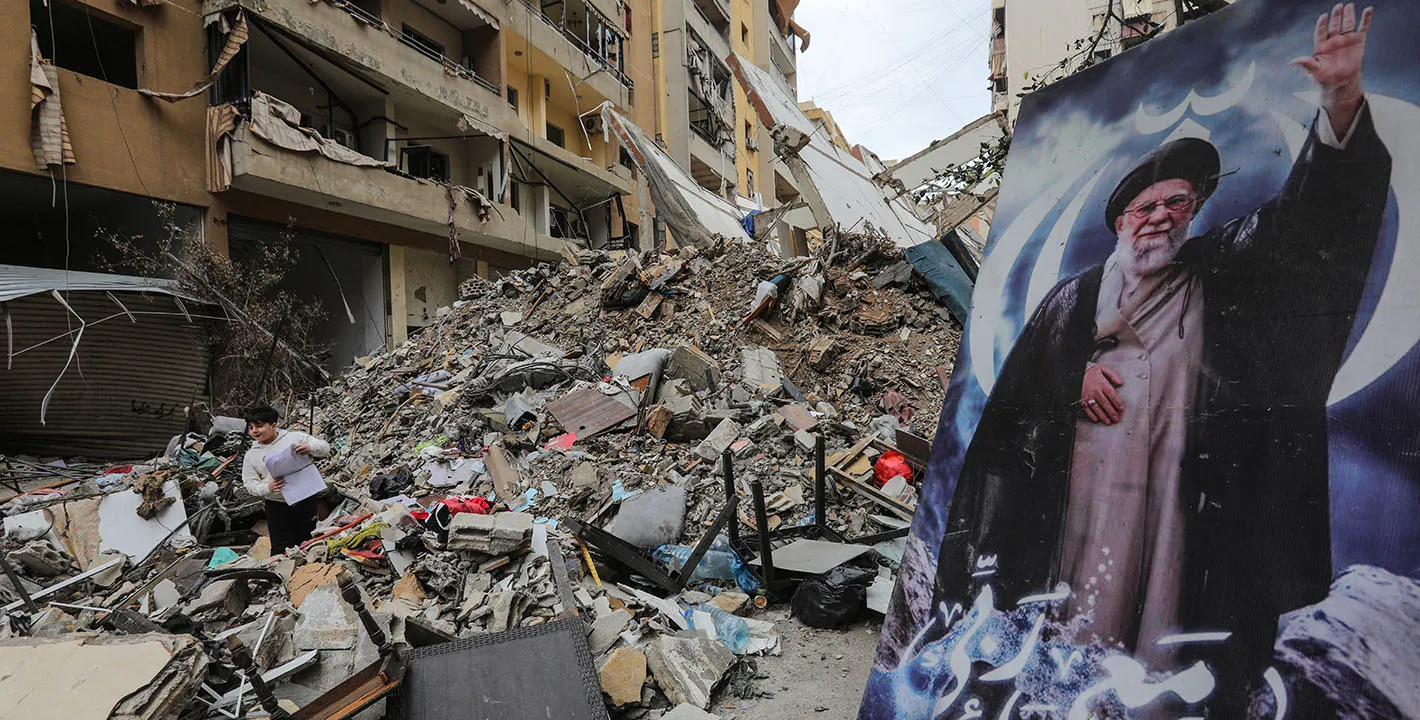
This strategic brief analyzes Lebanon’s opportunity to incorporate Hezbollah’s disarmament into upcoming U.S.-Iran negotiations. By leveraging a multi-national regional coalition plan, Beirut can exploit shifting Iranian deterrence paradigms to restore state sovereignty.
The shifting geopolitical architecture of the Middle East demands a calculated recalibration of Lebanese statecraft, specifically regarding the integration of non-state actors into formal diplomatic frameworks. As Washington and Tehran convene to negotiate a comprehensive regional architecture, the status of Hezbollah emerges not merely as a localized security challenge but as a critical lever for broader stabilization. Capitalizing on this diplomatic window requires Beirut to proactively position the disarmament of Hezbollah within the U.S.-Iran bilateral agenda, transforming a historical liability into a strategic asset for sovereign governance.
Hezbollah Frameworks for Sovereignty
Lebanese officials have recently gone to great lengths to insist that Iran should have no say in their country’s affairs. In principle, this assertion of sovereignty is perfectly defensible, particularly as the United States and Iran prepare for a long period of negotiations in the weeks ahead. However, on the matter of Hezbollah’s weapons, Lebanon is highly unlikely to disarm the party without Iranian approval and a degree of regional involvement, which is why principle may represent more of an obstacle today than anything else.
During the forthcoming period, the Americans and Iranians are supposed to negotiate resolutions to outstanding issues, in particular Iran’s nuclear program. It’s unclear whether Lebanon will be an item on their agenda. However, the fact that Iran has tied a ceasefire in Lebanon to its ceasefire with Washington, and now says an agreement with the United States necessitates an Israeli withdrawal from Lebanon, has potentially opened the door to a breakthrough between the two countries on the Lebanese front. It makes sense for Lebanon’s president and prime minister to embrace this possibility and momentarily abandon their insistence that Iran should have no say in whatever affects Lebanon.
In linking the Iranian and Lebanese tracks in their demand for a ceasefire, the Iranians did something they had carefully avoided doing previously: they widened the scope of negotiations with the United States. In the past, whenever the Americans and Israelis sought to expand talks over Iran’s nuclear program to include Iran’s ballistic missiles and regional alliances, the Iranians refused to do so. However, today, by tying their own negotiating position to what happens in Lebanon, they may have indirectly allowed the Lebanese question to be brought into their discussions with the Americans, which gives Washington an opening to secure concessions on Hezbollah and its weapons.
Assessing Hezbollah Leverage
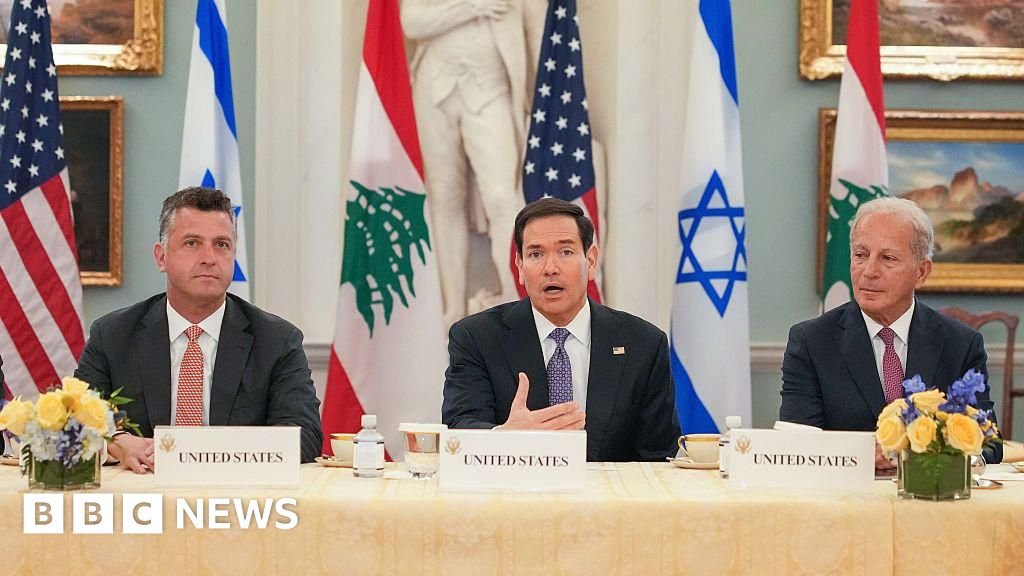
Iran still formally refuses to discuss its regional alliances, if one reads paragraph 13 of the framework agreement reached with the United States correctly. However, the negotiating agenda has yet to be finalized, and the agreement’s mention of “ensuring the territorial integrity and sovereignty of Lebanon” may create a wedge to raise the topic. The Americans can also reply that, if Lebanon is off the agenda, they have no incentive to put pressure on Israel to respect the ceasefire in Lebanon.
And if the Israelis continue violating the ceasefire, this would effectively grant them veto power over the success of the U.S.-Iran negotiations, which is not something Tehran wants to concede to them. Wouldn’t it be better, the Americans could add, to agree to a comprehensive agreement with Iran that encompasses a full cessation of hostilities in Lebanon and an Israeli withdrawal, while facilitating a far-reaching deal between Washington and Tehran? While nothing guarantees the Iranians would go along with this, they have their own interests to consider, and a settlement with the United States would be to their advantage.
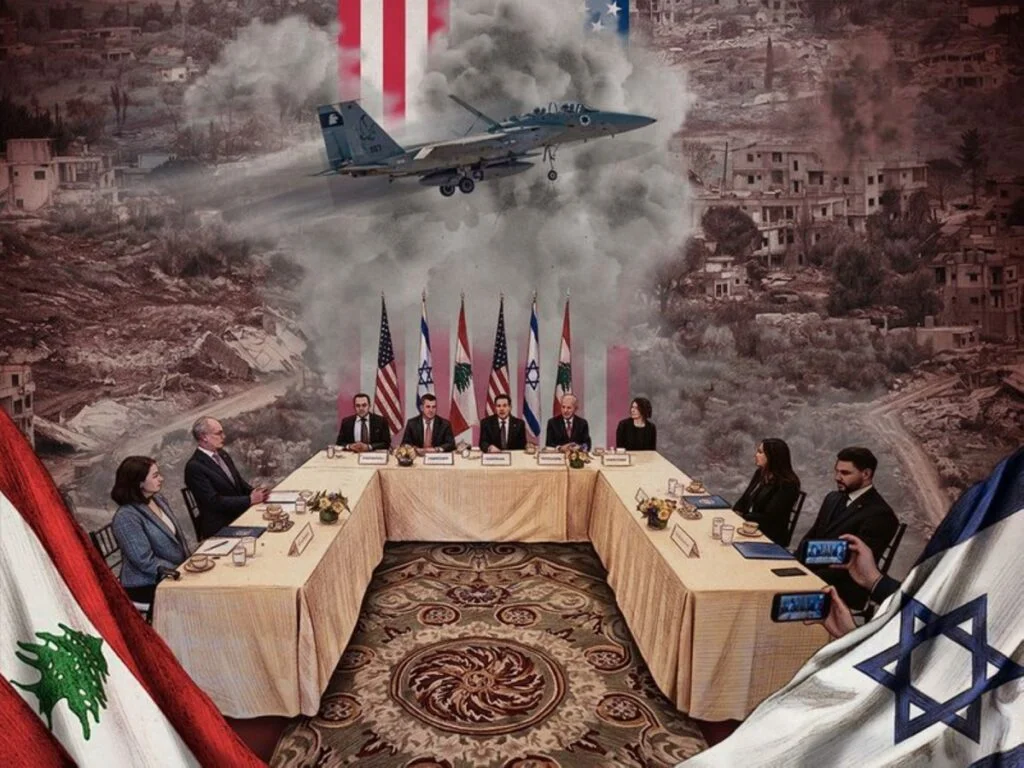
Assuming Iran were to then agree to discuss Lebanon, the Lebanese authorities would be in an ideal position to present a possible solution to Hezbollah’s weapons. This could come in the form of a document currently circulating that seeks to stabilize Lebanon and create a framework for strengthening the country’s sovereignty and disarming Hezbollah. The document, titled “Framework for a Phased Settlement to Strengthen Lebanese State Sovereignty and Implement the Taif Agreement,” was initiated by Egypt, but has since received input from Saudi Arabia, particularly on the implementation of the Taif Agreement.
This comes at a time when Egypt and Saudi Arabia are part of a wider coalition of nations that also includes Türkiye, Qatar, and Pakistan, which played an important role in helping negotiate the ceasefire between the United States and Iran. This coalition has also sought to push back against Israel’s drive for hegemony in the region, and in this context it has been active in trying to avert a deterioration of the situation in Lebanon, particularly sectarian conflict. That is why the countries of the coalition appear reluctant to see the Lebanese Army forcibly disarm Hezbollah, which they realize could have catastrophic consequences.
Phased Realities Facing Hezbollah
The document appears to still be in the process of finalization, and has been passed on to Hezbollah and Israel for their observations. On Hezbollah’s disarmament, it outlines a three-phased process of an “‘organized gradual transition’ rather than forced disarmament.
” In a first phase, it proposes “[f]reezing the development of heavy missile capacities” and “halting any cross-border military activity,” while in phase two it calls for something more controversial, namely “integrating selected Hezbollah cadres into the Lebanese Army and security agencies.” This would be accompanied by incorporation of “Hezbollah’s social and service institutions into state programs,” and the establishment of “a transitional coordination body under Lebanese state supervision,” before, in phase three, a “full transfer of defense responsibilities to the Lebanese Army” and the “transformation of Hezbollah into a fully political and civilian entity within the Lebanese system.”
In parallel, the document outlines a political process that involves full implementation of the Taif Agreement and political and administrative reforms. This would include the “establishment of the National Commission for the Abolition of Political Sectarianism, the creation of a senate, the adoption of expanded administrative and fiscal decentralization [and] reform of the electoral system.” The aim is to introduce a system that would, de facto, give Shiites more representation, while also fulfilling a longstanding Christian demand, namely allowing Christians to run Christian-majority areas with significant administrative and fiscal autonomy—the latter point going beyond what Taif had originally outlined.
The document also offers guarantees to the Shiite community, built around the principle of “full commitment to national partnership.” This includes “strengthening representation in state institutions in accordance with the Constitution, protection of Shiite-populated areas through reconstruction programs, ensuring that the community’s social base is not politically or security-wise targeted, and preserving the community’s role within Lebanon’s national political framework.”
Hezbollah Redefines Strategic Deterrence
Skeptics would point out that Iran is unlikely to make concessions on Hezbollah’s arms, even less so after having prevailed in the conflict with the United States and Israel. They may well be correct, and the windfall of released funds the Iranians may receive from the peace deal could encourage them to bolster Hezbollah and pay compensation to its supporters. Moreover, if Israeli forces remain in Lebanon, Hezbollah would be able to revive its resistance identity. Why would Iran agree to disarm Hezbollah in that case?
The question is a good one, but there are several things to consider. First, if the U.S. is prepared to remove sanctions on Iran and release frozen funds, this would give it leverage to make demands of the Iranians on major issues, not least Hezbollah.
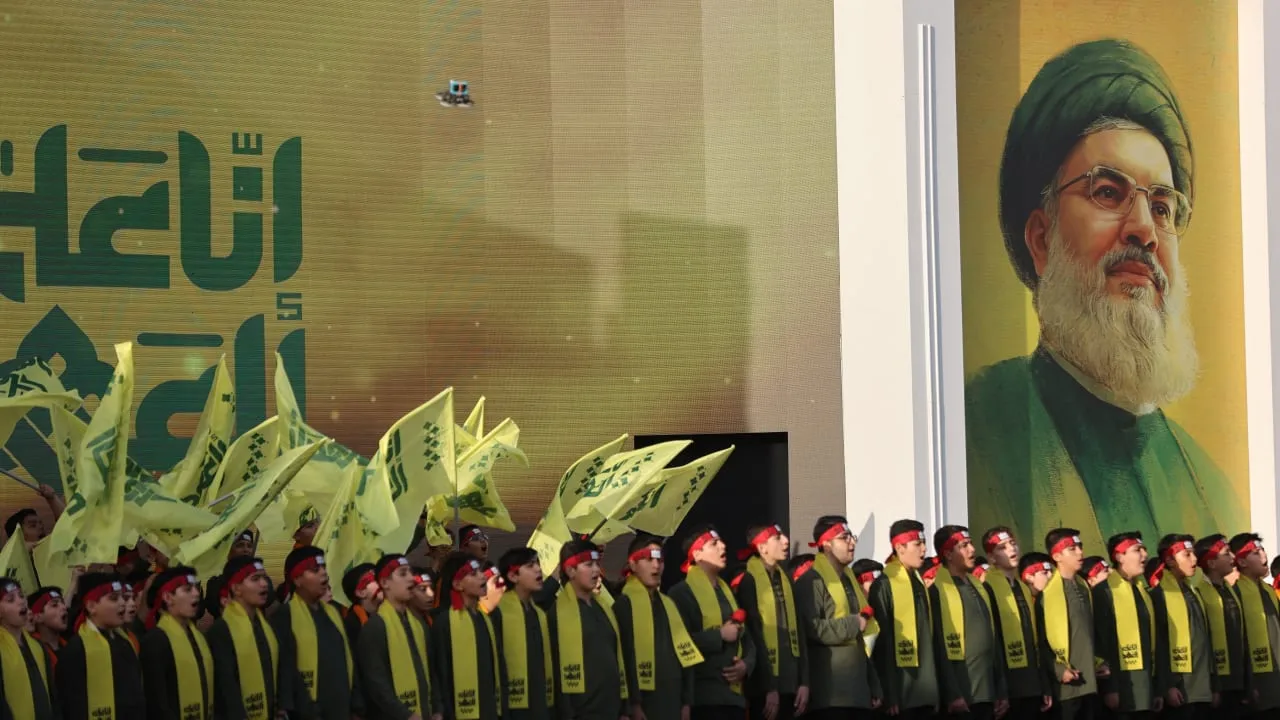
Furthermore, the regional order is changing rapidly, and the recent war has brought about a realignment in the Middle East, and new conditions. Iran has shown through its ballistic missile program and ability to close the Strait of Hormuz that it has a significant deterrence capability of its own, therefore that its forward defense strategy against Israel through Hezbollah is no longer as vital to its security as it once was. Indeed, the suffering of Lebanon’s Shiites has also underlined the limitations of placing the burden of Iran’s defense on them; while it may have succeeded this time, it offers diminishing returns.
The U.S. fiasco in this war may also lead to Washington’s disengagement from the region, as people within the administration see an opportunity to reassert that Middle Eastern wars are a waste of energy and dollars when the focus should be on China. U.S. bases have proven to be ineffective in defending American allies, and indeed have served to invite attacks against these countries.
In light of this, one of Iran’s main objectives—reducing U.S. power and presence in the Middle East—could be at hand, which would mean that Israel’s latitude to attack Iran would decrease. This alone could mandate a change of strategy on Iran’s part, one that seeks the containment of Israel in cooperation with other regional powers that oppose Israeli hegemony, rather than relying on a Hezbollah that is regionally divisive. Moreover, if the Iranians agree to suspend their nuclear program in talks with the Americans, Israel may be less likely to attack them, which was a major factor in propping up the Hezbollah deterrent.
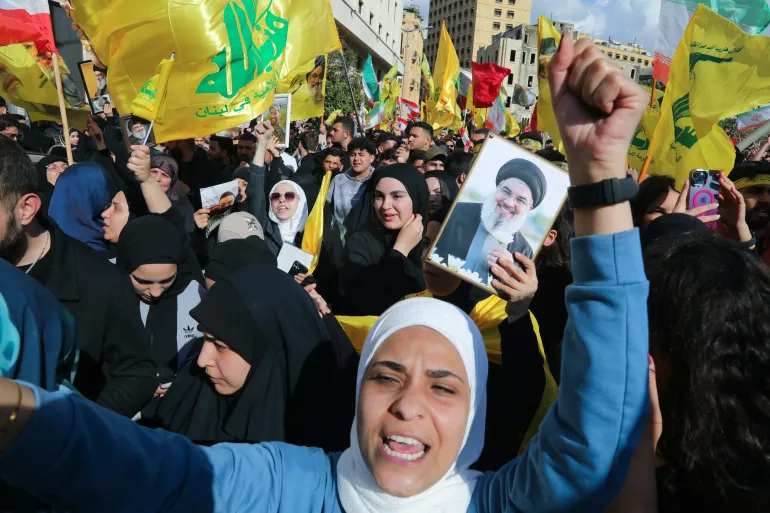
Global Strategic Hezbollah Negotiation Frameworks
Both Hezbollah and Iran will also have to soon address the ruin faced by Lebanon’s Shiite community. Israel will continue to occupy all of the border region, and will continue to intervene militarily in the area between the Litani River and Sidon, which means that Hezbollah’s revival will come at a high cost for inhabitants of south Lebanon. Iran will be forced to support Lebanon’s Shiites for many years in this context, creating a dependency that, while it may be sustainable, will draw funds away from Iran’s own reconstruction.
Such reasoning may change nothing. Yet all the signs are that Iran is not a monolith, and the death of Ayatollah Khamenei may allow more power centers to emerge that take a less rigid view of Hezbollah than the Islamic Revolutionary Guard Corps.
A plan that reorients Iran away from a reliance on Hezbollah’s weapons and enhances the Shiite community’s stake in the Lebanese system, that also brings Arab guarantees to the community, providing indirect recognition of Iran’s substantial regional role, may conceivably be something to which the regime in Iran agrees if it seeks to normalize its ties with Arab countries after decades of tensions. Endless wars have exhausted Iran as much as everyone else in the region, so there may be a constituency in Tehran that favors consolidating the political system at home, even if it means diverting resources from a regional agenda that has brought misfortune to all.
Lebanese officials have to assess carefully the dynamics in the region as negotiations between the United States and Iran begin. They should insist that the future of Hezbollah be on the table of those talks, and they should work with countries in the regional coalition to bring their plan up for discussion.
Yet this requires, first, that the Lebanese themselves reach a consensus on the coalition plan, because there continues to be a lack of diplomatic coherence in Beirut. We may be on the cusp of an overhaul in regional relations, and Lebanon has said it wants to be at the table, not on the table. It can’t be at the table, but it can bring something to the table. By working with other countries to present the coalition’s plan to the Americans and Iranians that addresses domestic stability and Hezbollah’s arms, Lebanon might achieve what it wants.