
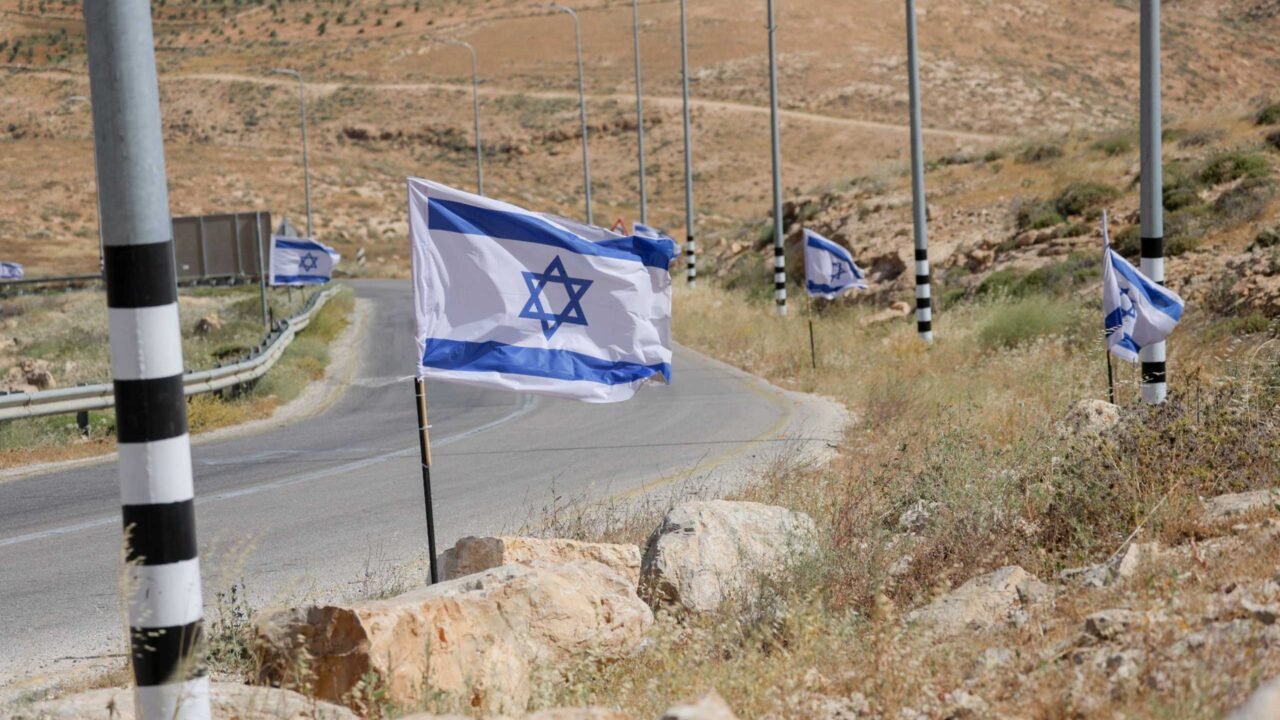
Europe’s political and economic tools can counter settlement expansion but internal EU divisions and Israeli diplomacy have long stalled action. A Hungarian policy shift now enables trade measures under QMV, bypassing vetoes to impose costs on Israel before Palestinian statehood becomes impossible.
Europe’s long-standing policy paralysis on Israeli settlements has finally met its match in shifting domestic politics and the accelerating erosion of Palestinian statehood. The European Union now possesses the economic and diplomatic leverage to challenge Israel and its settlements, yet the window to salvage a viable two-state solution is closing fast, demanding immediate rather than consensus-based action on trade measures that directly target the settlement economy. While internal divisions have historically hampered the EU, a pivotal shift in Hungarian politics has unlocked new possibilities, compelling Brussels to decide whether it will lead or be bypassed by a coalition of member states determined to challenge Israel and its settlements through national legislation.
challenge Israel and its settlements immediate action
Europe possesses the necessary political and economic tools to act against Israel’s settlement expansion. But it needs to deploy them fast, or risk the possibility of an independent and viable Palestinian state disappearing altogether.
The long-term trajectory points towards greater European pressure on Israel, at least so long as it is ruled by the current far-right government. However, the pace of that shift remains far slower than the changes Israel is imposing on the ground to block a two-state solution. It is a race against time—and Europe is still falling behind.
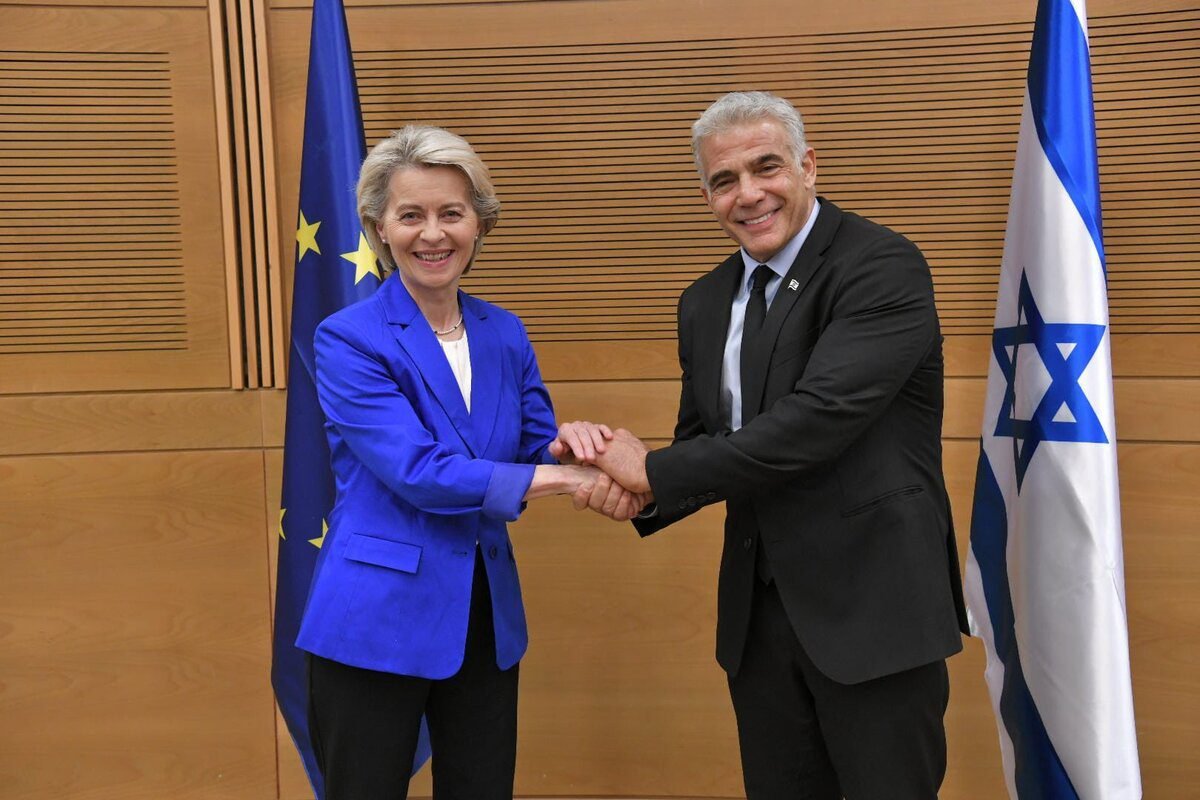
Beyond Budapest
EU officials often cite internal divisions as the principal reason for European inaction. There is some truth to this. In recent years, Hungary positioned itself as the EU’s spoiler-in-chief, repeatedly blocking public statements, internal discussions and punitive measures directed at Israel and its settlement enterprise. Although the EU adopted two rounds of sanctions against violent settlers in 2024, then-prime minister Viktor Orban delayed their passage and significantly reduced the number of designated targets. He subsequently imposed a veto on further measures.
Peter Magyar’s election as prime minister has already led to a more constructive Hungarian approach. The removal of Budapest’s veto cleared the way for a new round of sanctions, including against Amana, a key financier and builder of Israeli settlements since the late 1970s. But Orban’s Hungary was never alone. Several other member states are shielding Israel from European pressure, and Israeli diplomacy is actively working to reinforce this blocking camp.
The Czech Republic, for example, is among Israel’s most reliable defenders, blocking sanctions against Israel’s hard-line national security minister Itamar Ben-Gvir. In Slovenia, conservative prime minister Janez Jansa—who is close to Netanyahu and an outspoken supporter of the Israeli settler movement —has radically changed the country’s policy in Israel’s favour. One of his first decisions upon re-election was to reverse his country’s arms embargo and national-level travel bans against Netanyahu and settler ministers like Ben-Gvir. These had previously been imposed by Jansa’s predecessor, Robert Golob.
But it would be wrong to blame only smaller eastern members. Germany’s unwavering support for Israel (its self-described Staatsräson) is extendeding beyond safeguarding Israel’s security to include protecting its settlement project and shielding Israeli officials from accountability for violations of international law. Berlin has recently opposed EU sanctions against Bezalel Smotrich, Israel’s finance minister and prominent settler activist. Smotrich is, more than any other Israeli official, an architect of the Israeli government’s accelerating settlement expansion and fragmentation of Palestinian territory.
From unanimity to a challenge Israel and its settlements shift
As developments worsen on the ground, member states are calling for the EU to do more to defend the two-state solution and respond to escalating violence against Palestinians in the West Bank. While the EU continues to wrangle over sanctions against Ben-Gvir and Smotrich, it should act against other organisations that finance and facilitate settlement expansion such as Ateret Cohanim, the Jewish National Fund’s Himnuta real-estate subsidiary, and the Settlement Division of the World Zionist Organization.
However, Europe’s focus on settler extremism risks treating developments in the West Bank as a series of isolated incidents—or as the product of Netanyahu’s far-right coalition—rather than as a state-driven project with bipartisan support from successive Israeli governments since the occupation began in 1967. If the EU is serious about influencing development in Israel and the occupied Palestinian territories, it will need to deploy the far greater leverage that comes with access to the European market.
Here, the EU’s focus on unanimity voting is a distraction—and arguably an excuse for inaction. While consensus remains a prerequisite for foreign policy decisions, meaningful action can be taken in areas such as trade through Qualified Majority Voting (QMV). Under this procedure, measures require the support of only 55% of member states representing at least 65% of the EU’s population. Unlike foreign policy decisions, a single government cannot veto action, which the EU can use to its benefit to put pressure on Israel.

Targeting European trade measures
The EU’s most immediate priority should be ending trade and investment relations with Israeli settlements. Such measures would directly challenge the financial viability and expansion of the settlement enterprise, in line with the 2024 advisory opinion of the International Court of Justice. A growing number of member states, including Poland, Denmark and the Netherlands, support an outright trade ban with Israeli settlements. Crucially, the EU could adopt this through QMV as a trade measure aimed at ensuring consistency with international law, bypassing many of the political obstacles paralysing the EU’s response.
Ending Israel’s devastation of Gaza and its decades-long occupation of the West Bank, however, also requires an all-of-Israel approach to shift Israeli public attitudes. This must go beyond restricting settlement trade and target Israel itself. Spain and Ireland were the first member states to call for the suspension of the EU-Israel Association Agreement in February 2024 in response to “widespread concern about possible breaches of [international humanitarian law] and international human rights law by Israel” in Gaza. In September 2025, the European Commission proposed suspending parts of the agreement’s trade-related provisions through QMV.
In practice, this would remove preferential tariffs for goods originating from within Israel’s internationally recognised borders and impose one of the first direct economic costs on Israel over its violation of Palestinian rights. Support for such a move has grown with the expansion of Israel’s destruction of Gaza and its population, but a qualified majority of members is yet to be reached.
trade measures challenge Israel and its settlements
Given the population size and political weight of players like Berlin—or more plausibly, Rome—assembling such a majority requires winning at least one of them over. To date, both have resisted more serious measures against Israel. But European domestic opinion may prove to be a powerful driver of change.
With public attitudes towards Israel falling sharply, governments are under increasing scrutiny. In Italy, a critical swing state, foreign minister Antonio Tajani told the Italian parliament that his government is “ready to evaluate, with our European partners, measures on products from illegal settlements”. He added, “we are awaiting the European Commission’s proposals”. Prime minister Giorgia Meloni has confirmed her government’s shift in relation to settlement trade.
The European Commission is now under growing pressure to act—if only to preserve its relevance on the issue. Yet it continues to argue that an outright ban on settlement trade is a sanction, not a trade measure, and is therefore a foreign policy decision requiring unanimity. This position is at odds with the legal evaluation of member states advocating a ban, and the European Council.
In the absence of tangible action at the EU level, member states will pursue national measures. For example, in September 2025, Spain became the first European country to ban trade with Israeli settlements. Belgium, Ireland and the Netherlands have announced plans to follow suit. Belgium has also prohibited the export and transit of weapons to Israel and suspended key consular services for its citizens residing in Israeli settlements. Together with Australia and Canada, Britain and Norway have also imposed their own sanctions on Israeli settlement funders.
But national governments can go further in challenging the maintenance and expansion of Israel’s settlement enterprise. At a minimum, they should prohibit businesses that deal with settlements, including banning companies from participating in settlement construction and real-estate sales.
They can also prevent funds being transferred to settlements through European charities: in Britain, for example, charities have allegedly channelled more than £28m (€32m) to Israeli settlements over the past five years. Britain, having reclaimed control over its trade policy after Brexit, should exercise its legal and political ability to prohibit trade with Israeli settlements.

challenge Israel and its settlements beyond consensus paralysis
Europe must play its hand
Europeans alone cannot force Israelis into a two-state solution. But they can begin to reshape the incentive structures underpinning Israel’s support for settlement expansion and military subjugation of Palestinians, and demonstrate to Israel that its actions have consequences.
The urgency of such measures is not new. In 2014, the EU warned that settlement expansion in strategic areas such as E1 and Givat Hamatos, together with the planned displacement of Palestinian communities including Khan al-Ahmar, could trigger European sanctions. Twelve years later, Israel has crossed these red lines, but the promised consequences have not materialised.
If the EU and its member states are serious about finding a pathway towards Israeli-Palestinian peace, they must seize what may be the last opportunity to act.