
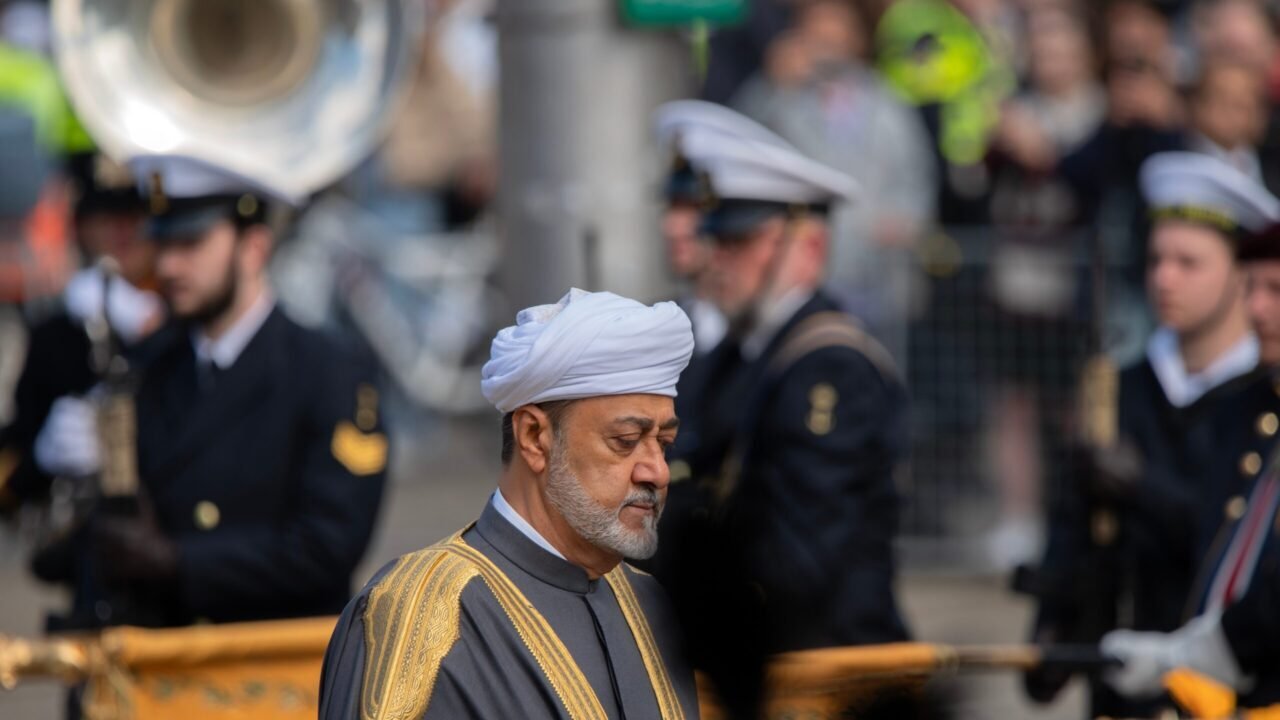
A rigorous evaluation of maritime vulnerability along the Musandam Peninsula, outlining the imperative for a revitalized US-Oman security architecture to preserve freedom of navigation against asymmetric Iranian pressure in the Strait of Hormuz.
The geopolitical volatility surrounding the strategic chokepoints of the Middle East underscores why securing regional maritime arteries remains a core imperative for global market stability. Implementing an explicit, proactive security posture In Defense of Oman offers a resilient framework for long-term regional containment and shields critical supply chains from hostile economic leverage. Ultimately, prioritizing targeted logistical cooperation and diplomatic reassurance In Defense of Oman will yield a far more durable deterrent than reactive naval deployments alone.
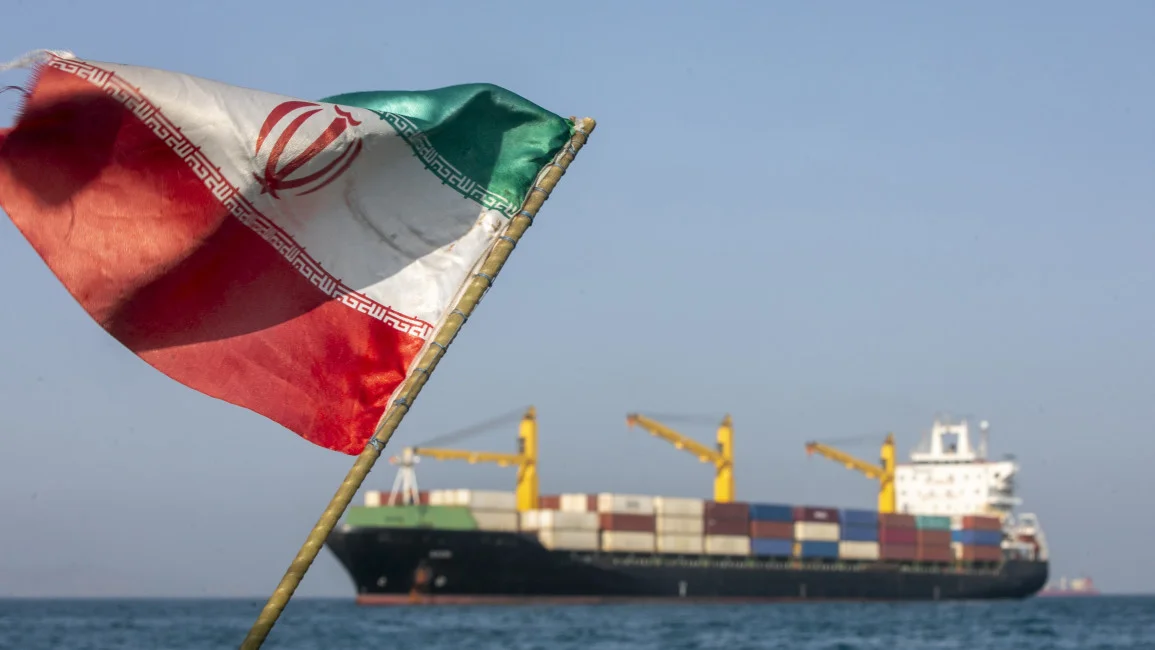
In Defense of Oman: Navigating Strategic Chokepoints
The Iran War brought a halt to shipping in the Arab Gulf, created a spike in oil prices and inflation, and left enormous destruction in its wake, but it could have been worse. Iran could have seized the southern shore of the Strait of Hormuz in a bid to cement its control over the strategic waterway and enforce its vision for a toll on shipping in the gulf. It still can. And it very well might do so if the gulf finds itself in another war, because the next time Iran will be better prepared and even more determined to use the strait to hold the global economy hostage.
At stake is the Musandam Peninsula, the southern half of the Strait of Hormuz, which is Omani sovereign territory. Among all the Arab Gulf states, Oman’s strip of land along the strait holds both the nearest proximity and the greatest strategic importance for Iran.
It is only 37 miles to Bandar Sirik in the east, 30 miles to Larak Island in the north, and 33 miles to Hengam Island in the west, with Iranian military forces stationed throughout these areas. At the narrowest chokepoint, taking the many little islands and shoals into account, Oman and Iran are only 21 miles apart, and large vessels are limited to a small passage in the middle of it that is only about 3 miles wide.
Other than the small town of Khasab, the Omani side of the strait is mostly rocky escarpments dotted with villages of local tribes, making it incredibly difficult to defend on land or patrol by sea. The drive along the coast on the A-13 from the border post at Tibat to the center of Khasab, with its stunning views of the waters below and the rock face above, may be blissfully reminiscent of California’s Pacific Coast Highway, but it belies an unsettling security dilemma.
Geopolitical Friction and In Defense of Oman
Defense and security would ideally be handled remotely by unmanned aerial and maritime systems. However, the Omani government does not have the money to invest in advanced technology start-ups or to build its own local defense industries the way its Arab Gulf neighbors have. And even if Oman could partner with Western firms to localize production and design, combining arms in an integrated fashion with artificial intelligence systems, it would still not be enough to counter a major threat from a country like Iran.
Under Oman’s previous ruler, Sultan Qaboos, the country’s defense was almost entirely linked to the United Kingdom. Muscat was protected by whatever passed for a British security umbrella in the post-colonial era, meaning that Oman often relied on diplomatic channels in tandem with European partners as both a first and last resort. This put Muscat on an awkward footing throughout the Iran War. Officials in Washington and the other Arab Gulf capitals sought clear signs that Muscat stood firmly with them against Iranian aggression, but the Omani position came across as ambivalent.
Security Realities and the Mandate In Defense of Oman
It took the Omani government more than a day to publicly condemn the devastating Iranian attack on Qatar’s natural gas facilities. Yet, when the Islamic Revolutionary Guard Corps (IRGC) foisted an inexperienced and unqualified Mojtaba Khamenei into the role of supreme leader, Muscat immediately sent its congratulations. Iran hit the commercial port of Duqm and an oil storage facility in Salalah at the start of the war, and struck several tankers offshore, but Oman was spared the relentless assault that its neighbors suffered. And, of course, there is the Strait of Hormuz. As Iran was establishing its “Persian Gulf Strait Authority” and hoping to use it to extract exorbitant tolls, Oman was largely silent on the matter.
Oman’s hesitation and reticence are a lot easier to appreciate when standing on the cliffs above the port of Khasab and reading the headlines from the Iranian press about how the Islamic Republic intends to retain full control over the strait below. On June 25, Iran issued a warning to ships approaching the strait, requiring them to navigate through Iranian waters and register with Iranian authorities. Iran then launched several drones, one of which struck a Singapore-flagged vessel that was trying to transit Omani waters.
In Defense of Oman: Securing Shipping Routes
The Iranian attack was intended as a signal to the United States that it has no intention of ceding control of the strait, but also as a warning to Oman. In the last few weeks since the ceasefire went into effect, Oman has sought to establish a free shipping route that can accommodate both inbound and outbound traffic through its own protected space, while avoiding Iran entirely.
This is a major opportunity for America and its allies, but a daunting challenge for the Royal Navy of Oman, which has taken on an enormous burden. Ships are now crowding through this Omani channel of traffic where they risk collisions, sea mines, boarding and seizure by Iranian forces, and unattributable attacks from Iranian commanders acting without orders.
Rebuilding Alliances and Partnering In Defense of Oman
How to Rebuild the US-Oman Relationship The MOU contained in the Islamabad Declaration is only a statement of principles, not a detailed implementation plan with mechanisms for monitoring and verification. Even if details are worked out during the 60-day negotiating period, there is no way to guarantee freedom of navigation through the strait in the long run without a considerable US troop commitment. The United States needs a confident and capable security partner.
In the months ahead, each of the Arab Gulf states will individually pursue advanced technology, security assurances, and alternative routes for energy exports. However, if the rumors reported in multiple Israeli media outlets are to be believed, these US allies are probably only willing to act with military force against Iran in extremely limited ways and only under cover of a much larger American offensive. And the only lesson to be learned from the repeated American attempts to establish a credible and coherent gulf security architecture over the last 50 years is that the Arab states are unlikely ever to stand up an integrated, independent and capable mechanism for collective security.
If the United States wants to ensure freedom of navigation through the Strait of Hormuz in the long run, it will have to reassess its relationship with Oman. This relationship has rapidly deteriorated over the last year. Pundits in Washington have questioned Oman’s role as a mediator, pointing to rumors of cross-border smuggling by Iranian proxies in Yemen and insisting that Oman’s relationship with Iran is evidence of “double-dealing” and “acting like an enemy.”
In mid-March, the Trump administration excoriated Omani Foreign Minister Badr Albusaidi’s op-ed in The Economist, which called for a return to peace talks. The president notably omitted Oman from the list of regional allies that he thanked in his April 1 address to the nation. In referring to the notion of a joint Iranian-Omani toll for passage through the strait, President Trump remarked: “Oman will behave just like everybody else, or we’ll have to blow them up.”
Some of this reflects the inside game in Washington. The Israelis sought to convince the White House of the urgent necessity of destroying Iran’s nuclear program and, following that, decapitating the regime. In both cases, Omani efforts to mediate a peace settlement were delaying and distracting from what Israel believed to be a time-sensitive mission of existential importance, allowing Iran to stall for time. Some of this could be attributed to poor communication. There are few interlocutors between Washington and Muscat, and the US ambassador is a career diplomat appointed under the Biden administration.
But some of this should also be seen as a misunderstanding in Washington of Oman’s unique and precarious position on the southern shore of the Strait of Hormuz. Iran declared that the strait was sovereign territory, Iran established an authority to administer tolls, Iran laid mines in the way of civil maritime traffic, Iran declared that it is not bound by the provisions of the UN Convention on the Law of the Sea (UNCLOS), and Iran decided that Oman would somehow participate in all of it. And if Oman does push back against that Iranian pressure in any substantive way, Iran can escalate to the point of seizing the entire strait.
Unless America plans to maintain two aircraft carrier battle groups in the vicinity indefinitely, rebuilding the relationship with Oman is probably the only credible form of deterrence in the long term.