
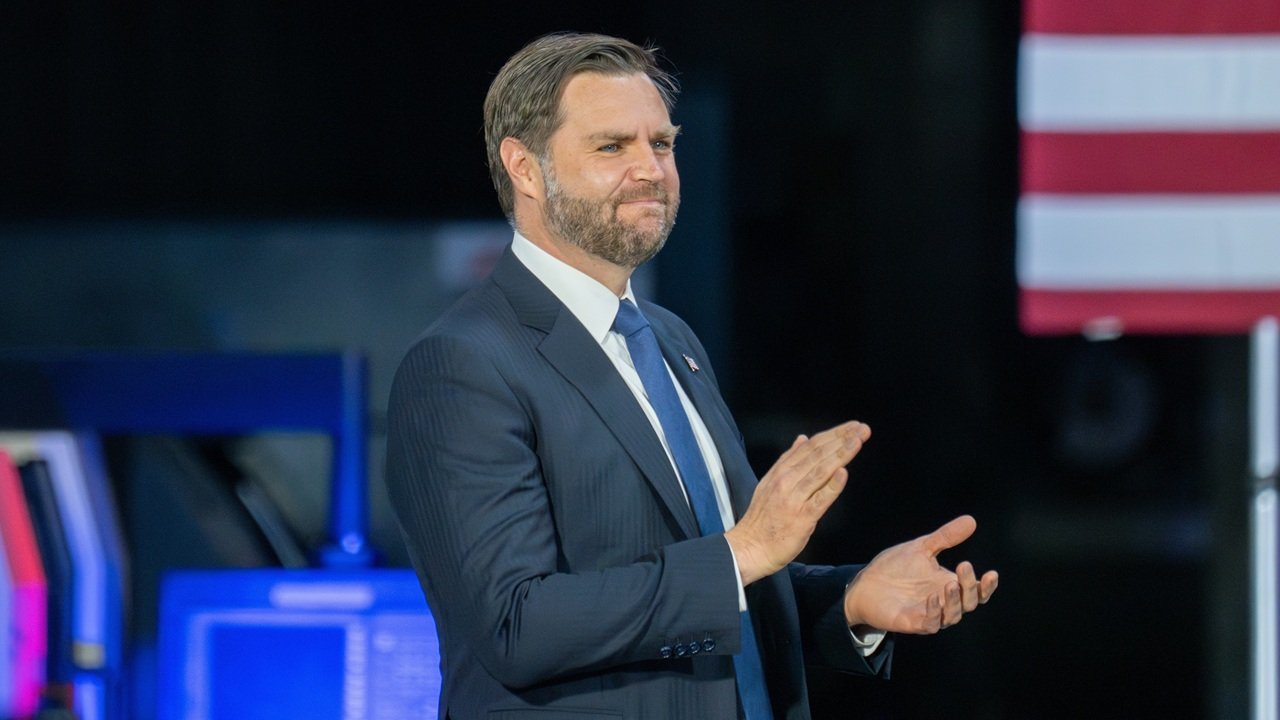
A profound critique of Vice President JD Vance’s Middle East rhetoric, demonstrating how alienating critical regional partners compromises Washington’s global deterrence framework and damages strategic trust forged via the historic Abraham Accords.
Washington’s strategic posture requires absolute clarity, yet current rhetoric risks undermining the foundational deterrence architecture of the Middle East by treating vital partnerships with unhelpful ambivalence. Diminishing these deep-seated geopolitical ties compromises regional stability, clearly showing that the perspective indicating JD Vance is wrong deserves rigorous scrutiny from global defense planners. To treat existential vulnerabilities as mere domestic talking points signals weakness to adversaries, proving further that JD Vance is wrong to treat historical diplomatic alliances as transactional arrangements.
JD Vance Is Wrong Analyzed
Vice President JD Vance is wrong about Israel.He is wrong to suggest that Israel is an ally like any other. He is wrong to treat the fears of America’s most reliable Middle Eastern partner as a political inconvenience. And he is wrong if he believes that America First requires public impatience with Israel and the Gulf while granting diplomatic patience to Iran.
This is not how a great power reassures its friends. This is not how America preserves deterrence. And this is not how the Vice President of the United States should speak when the security of Israel, the United Arab Emirates, Bahrain, and Kuwait is at stake.
The Vice President’s Words Carry Tremendous Weight I say this as a friend of America, a friend of Israel, and a believer in peace. The United States has every right to reject endless wars. The American people have every right to demand restraint, prudence, and discipline from their leaders. But restraint is not indifference. Prudence is not public scolding of allies.
And America First cannot mean allies last. Mr. Vice President, you are not a podcaster competing for applause. You are not a commentator engaged in one-upmanship before microphones and cameras. You are the Vice President of the United States. Your words do not disappear into the noise of a media cycle. They travel through embassies, war rooms, intelligence services, royal courts, parliaments, markets, and military headquarters. They reassure allies, or they alarm them. They deter enemies, or they encourage them.
When the Vice President of the United States speaks about Israel, Iran, and the future of the Middle East, he is not speaking only to a domestic political audience. He is speaking to peoples whose security is threatened, to countries that have taken risks for peace, and to allies who placed their trust in American leadership.
In a dangerous region, words from Washington are not simply opinions. They become strategic signals.
In a recent article in The Jerusalem Post, I wrote that Israel must defend itself without losing America. I meant every word. Israel has the right, and the duty, to defend its people. But Israel must also protect the American political, moral, strategic, and emotional support that has long been central to its national security. The bond with the United States is not a technical alliance. It is living capital. It must be respected, preserved, and strengthened.
Why JD Vance Is Wrong
America and Israel Are Inseparable Allies Today, I say the other half of that truth: America must lead without losing the trust of its allies.
Israel is not a temporary partner, a tactical convenience, or a file on a bureaucratic desk. The relationship between America and Israel is strategic, democratic, cultural, moral, scientific, military, and historical. It is woven into the American story, just as America is woven into Israel’s story.
The American Jewish community is part of America’s cultural and civic greatness. Israel, for generations, has stood as a democratic ally in a region where democracy is rare, danger is permanent, and the cost of miscalculation can be existential. To speak of Israel as merely “an ally like any other” may please a certain political audience, but it does not reflect the depth of history, sacrifice, intelligence cooperation, shared values, and strategic interdependence that define this relationship.
Regional Geopolitics Proving JD Vance Is Wrong
Nor is Israel alone in facing the consequences of Iranian power. The countries on the front line with Iran are not an audience for Washington’s domestic political theater. Israel, the United Arab Emirates, Bahrain, and Kuwait do not experience Iran as an abstraction. They experience it through missiles, drones, proxy networks, air-defense alerts, threats to shipping lanes, and the permanent pressure of a regime that has made destabilization a method of statecraft. These countries have the right to be heard. They have the right to ask questions. They have the right to demand clarity before being asked to live with the consequences of an agreement negotiated above their heads.
The Abraham Accords were not a public relations event. They were an act of strategic courage. Countries chose peace, modernization, coexistence, and openness because they believed that American leadership could help build a new regional order. They trusted President Trump’s vision and the promise that peace would bring security and prosperity, not uncertainty and abandonment.
That peace architecture cannot survive on ceremonies alone. If the United States wants regional partners to choose moderation over extremism, normalization over rejection, and modernization over ideological darkness, then Washington must show that such choices are rewarded with respect, consultation, and protection. No country will take risks for peace if it believes that, when danger arrives, America will speak more harshly to its friends than to its enemies.
JD Vance Is Wrong Affirmed
Mr. Vice President: Distrust Iran, Not Israel Mr. Vice President, there is a contradiction here that cannot be ignored. You say you do not trust anyone. Very well. Caution in diplomacy is not weakness. But why does your skepticism appear sharper toward Israel, America’s most reliable ally in the Middle East, than toward the Iranian regime? Why should a democratic ally that has fought alongside America’s interests be treated with public suspicion, while an autocracy that arms proxies, exports missiles, threatens Gulf security, and calls for Israel’s destruction is granted time, process, ambiguity, and diplomatic patience?
You cannot ask front-line allies to trust a process if you first tell them that their judgment does not matter.
You cannot tell Israel to calm down when Israel lives under an existential threat. You cannot tell the United Arab Emirates, Bahrain, and Kuwait to remain silent when they know that Iranian power is not only negotiated in diplomatic rooms, but projected through drones, militias, missiles, sabotage, and intimidation. And you cannot reduce the security of allied peoples to the emotional management of an electoral minority in the United States.
Modern Deterrence Suffers When JD Vance Is Wrong
The American people have every right to be tired of war. They have every right to demand that American leaders defend American interests first. But serious Americans must also understand this: America’s alliances are not charity. They are instruments of American power. Israel’s security strengthens American deterrence. Gulf stability protects global energy markets and American strategic reach. The peace opened by the Abraham Accords remains one of the most promising paths toward modernization and coexistence in the Middle East. Weakening confidence in that path does not make America stronger. It makes Iran bolder, allies more anxious, and the region more dangerous.
Mr. Vice President, you may disagree with Israeli leaders. You may defend the President’s diplomatic choices. You may insist that America will not be dragged into another Middle Eastern war. All of that is legitimate.
But do not humiliate allies in public. Do not treat Israel’s fears as political inconvenience. Do not reduce the Abraham Accords to yesterday’s achievement. Do not speak to front-line countries as if they were spectators in Washington’s domestic debate.
The United States is greatest when it leads with confidence, not resentment; with clarity, not performance; with loyalty to its friends and firmness toward its adversaries. America’s allies are not an audience, and the Vice Presidency of the United States is not a podcast.